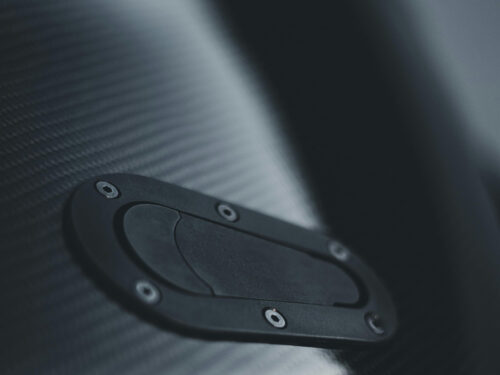
Using carbon economically
When the switch is really worthwhile More performance, lower costs How companies can increase their efficiency and competitiveness through intelligent


Carbon-fiber-reinforced plastic (CFRP) is now one of the highest-performance materials used in modern lightweight construction. Thanks to its exceptional combination of high strength, stiffness, and low weight, carbon fiber is widely used in high-tech industries such as aerospace, motorsports, robotics, and medical technology. However, anyone designing with carbon fiber should have a thorough understanding of the material’s unique properties in order to make the most of its potential.
Carbon is particularly impressive due to its high stiffness and excellent fatigue strength. Components made of carbon fiber-reinforced plastic (CFRP) hardly deform under load and retain their structure even over long periods of time. In addition, the material is corrosion-resistant, chemical-resistant, and highly adaptable to specific load conditions—for example, through the targeted orientation of the fibers. Another advantage: carbon ages more slowly than many metallic materials.
However, carbon fiber also presents challenges. Its brittle fracture behavior differs significantly from the ductile behavior of traditional metals—in the worst-case scenario, excessive loads can lead to sudden failure. Added to this are higher material costs and greater complexity in machining, since carbon-fiber-reinforced plastic (CFRP) cannot simply be welded or plastically deformed. Instead, specialized manufacturing techniques are required.
CFRP is not only lightweight and strong—it also has properties that offer significant advantages in certain applications:
These properties make carbon a better alternative to metal in many areas—provided that the design and manufacturing processes are tailored to it.
CFRP cannot be formed or welded. Instead, it is machined, usually by milling, drilling, or cutting. The right process and tool are crucial for this.
Typical processing methods:
Depending on the geometry and material composition, it often makes sense to use a combination of several processes.
Joining CFRP components requires specialized techniques, as the material is not plastically deformable.
Common joining and fastening methods:
The choice of fastening technology depends on the load, component geometry, and application.
Carbon fiber composites (CFRP) are used in numerous industries—anywhere where low weight, high stiffness, temperature stability, or special material properties are required.
In the aerospace industry, CFRP components are used as load-bearing structural elements, fairings, or interior components to reduce weight while ensuring maximum stability. Their low thermal expansion also ensures dimensional stability under extreme temperature conditions—which is essential, for example, in satellites or precision instruments.
Carbon fiber has also become indispensable in the automotive industry —and especially in motorsports: Lightweight yet extremely rigid suspension parts, body components, aerodynamic elements, and safety cells enhance performance and efficiency.
In mechanical engineering, CFRP components enable designs with exceptionally low vibration and high precision—ideal for highly dynamic manufacturing processes, machine tools, or optical measurement systems where vibration damping and thermal stability are critical.
In medical technology, carbon is valued for its X-ray transparency, electromagnetic permeability, and biocompatibility. It is used, among other things, in patient tables, imaging support systems, and prosthetics—applications where radiation permeability and weight are important factors.
Developers in the fields of drone construction and robotics also benefit from these outstanding mechanical properties: CFRP components are lightweight, extremely rigid, and resistant to weather and chemicals—making them ideal for durable, energy-efficient systems used outdoors or in industrial applications.
Another growing area is their application in optical and metrology technology. Thanks to their outstanding rigidity and minimal thermal expansion, carbon structures are ideally suited as substrates for mirrors, sensors, laser systems, or precision axes. They ensure reproducible measurement results and stable alignment even under changing environmental conditions—a decisive advantage in high-precision metrology, photonics, and scientific instruments.
As an experienced manufacturing partner, Carbon Components GmbH & Co. KG supports designers, developers, and engineers in bringing sophisticated CFRP solutions to life. Our expertise ranges from material consulting and design support to series production—always with a focus on quality, precision, and on-time delivery.
Our manufacturing process is based on state-of-the-art CNC technology, which we use to produce high-precision 2.5D milled parts exactly according to customer specifications. We machine plates, tubes, and profiles on both sides or all around, including drilling, fitting, countersinking, and threading. Our services also include engraving for identification purposes, as well as finishing options such as painting and printing.
In addition, we develop hybrid structures that combine carbon with metal or plastic components to optimally meet mechanical and functional requirements. Whether as a replacement for existing metal components or as a new development—we provide comprehensive advice on material selection and the appropriate manufacturing process.
Our Services for Design Engineers & Engineers:
✔ CNC milling technology with diamond-coated tools for maximum precision and the cleanest cut edges.
✔ Custom 2.5D milled parts, manufactured exactly to your specifications.
✔ Milling of complex structures, including threads, holes, countersinks, and fits.
✔ Machining of plates, tubes, and profiles on both sides and on the reverse side.
✔ Engraving of serial numbers, part numbers, or company logos for unique identification.
✔ Production of hybrid structures that combine carbon with metals or plastics.
✔ Development and design to optimize components and assemblies, including as a substitute for aluminum or steel.
✔ Material selection & consultation to find the ideal solution for your application.
✔ Series and prototype production, with short lead times.
✔ Finishing through painting or printing, for surfaces that are both aesthetically pleasing and functional.
Technical Specifications of Our Manufacturing Process:
✔ Materials: Carbon fiber (CFRP), glass fiber (GFRP), and other technical composite materials.
✔ Semi-finished products: sheets, tubes, and profiles, with standard or custom-designed layer configurations.
✔ Component dimensions: Up to 2,200 x 900 x 50 mm, material thicknesses from 0.2 mm to 30 mm, D250 x 2,000 mm for tubes
✔ Corner radii up to R0.5 mm, depending on the milling tools.
✔ Tolerances: In accordance with DIN ISO 2768; accuracies of ±0.05 mm available upon request.
✔ Lead times: Prototypes within 48 hours; small-batch and mass production in 10–15 business days.
✔ Free quote within 24 hours!
Whether for prototypes or mass production, for high-tech industries or custom solutions—we’re here to support you with our expertise!
Let’s work together to bring your next carbon project to life! Request your free quote now!
When the switch is really worthwhile More performance, lower costs How companies can increase their efficiency and competitiveness through intelligent
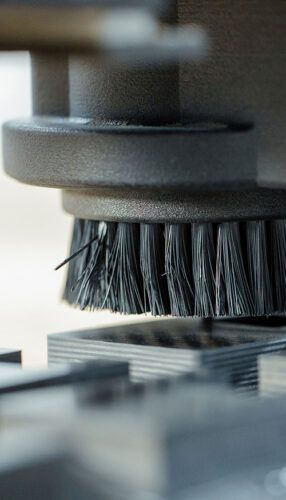
Precision Meets Lightweight Construction The Highest Standards for Materials and Components in the Precision Sector Ideal Material: Carbon-Fiber-Reinforced Plastic In
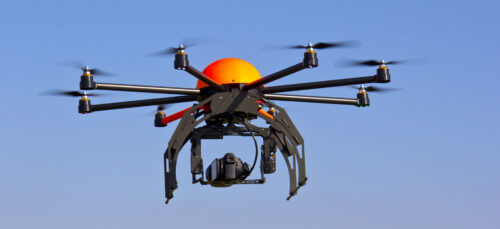
Efficiency, stability, and performance at the highest level Drones in Transition Focus on Technological Requirements In recent years, drones have