Carbon for Optical and Metrological Applications

Precision Meets Lightweight Construction

The Highest Standards for Materials and Components in the Precision Sector

Ideal Material: Carbon-Fiber-Reinforced Plastic

In optical systems and metrology applications, dimensional accuracy, thermal stability, and vibration behavior are critical. Even the slightest changes in shape or vibrations can significantly impair a system’s accuracy and reliability. Conventional materials such as aluminum or steel quickly reach their physical limits in this context—especially when weight reduction or a mobile design is also required.

Carbon-fiber-reinforced plastic (CFRP) has established itself as the ideal material for these requirements. It combines maximum stiffness with low weight and excellent temperature stability—exactly the properties required in precision engineering and metrology.

Requirements for Components Used in Optical and Measurement Systems

Carbon: For high-precision and sophisticated systems.

Typical applications, such as optical alignment systems, measuring frames, or sensor housings, place very specific demands on the material used:

  • Thermal dimensional stability: Minimal expansion due to temperature changes
  • Maximum inherent stiffness: No deformation under load or its own weight
  • Lightweight: Particularly relevant for mobile or moving systems
  • Vibration-damping: Reduction of microvibrations for precise measurement results
  • Non-magnetic and chemical-resistant: Can be used in sensitive environments
  • Long-term dimensional stability: Even under varying operating conditions

What Makes Carbon Special—Features That Impress

Carbon-fiber-reinforced plastics (CFRP) offer an exceptional set of properties that significantly outperform traditional materials such as aluminum or steel in many applications. Particularly in optical and metrological applications, certain properties are essential—properties that CFRP fulfills perfectly: high precision, dimensional stability, thermal stability, and structural damping—combined with minimal weight.

An overview of the key benefits:

  • Lowest thermal expansion: CFRP has a low coefficient of linear expansion of approximately 0–2 ppm/K, depending on the fiber structure. By comparison, aluminum has a coefficient of about 23 ppm/K, and steel has a coefficient of 11–13 ppm/K. This thermal stability allows for use in temperature-critical environments—such as aerospace, precision optics, or metrology—without any loss of accuracy.
  • Very high stiffness combined with low weight: With a modulus of elasticity ranging from 70 to 250 GPa (depending on the fiber and laminate structure), CFRP offers excellent stiffness—comparable to or even higher than aluminum, and in some cases on par with steel. At the same time, its density is only about 1.6 g/cm³, making CFRP significantly lighter than aluminum (2.7 g/cm³) or steel (7.8 g/cm³). This results in ultralight, high-precision structures with a high natural frequency.
  • Excellent vibration damping: Compared to metals, CFRP dampens vibrations up to 10 times more effectively. This reduces vibrations and resonance—a crucial advantage in optical systems, camera mounts, measuring devices, or precision axes, where every micrometer counts. Damping also extends the service life of mechanical components and reduces noise.

  • Resistance to corrosion, weathering, and chemicals: CFRP is resistant to rust, moisture, and many aggressive substances. It retains its shape and functionality even when exposed to UV radiation, high humidity, or contact with oils, acids, or alkalis. This makes it ideal for outdoor applications or industrial environments with varying conditions—without the need for any additional protective coatings.
  • X-ray transparency and electromagnetic permeability: Unlike metals, CFRP does not block radiation or electromagnetic fields. Its low mass attenuation makes it ideal for medical systems (e.g., in imaging), for non-destructive testing (NDT), and for applications where electrical or magnetic interference must be avoided—such as in sensor technology or high-frequency technology.
  • High dimensional stability even under dynamic loads: The combination of high rigidity, minimal expansion, and good damping ensures consistently stable geometries—even under mechanical stress, fluctuating temperatures, or prolonged use. This guarantees reliable repeatability and long-term precision.

These material advantages make it possible to create design solutions that are lightweight, stable, low-vibration, and durable—whether they are optical mounts, measuring frames, or complex precision assemblies.

Typical Applications – Carbon in Practice

  • Measuring frames and stands in coordinate measuring machines
  • Support Structures and Mounts for Laser Optics and Sensors
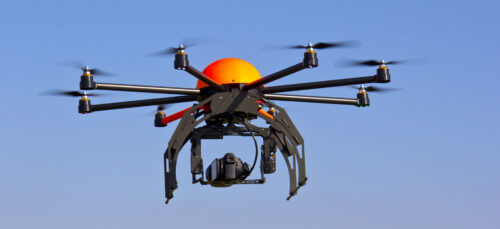
  • Lightweight components for mobile measuring devices or measurement drones
  • Guide rails and housings for inline measurement systems in production
  • Positioning units and alignment devices in microscopes, spectrometers, or camera systems

Because of its light weight, carbon is also ideal for applications in which components must be moved, accelerated, or positioned with high precision.

Manufacturing Capabilities – Precision in Execution

The outstanding material properties of carbon fiber-reinforced plastic (CFRP) can only be fully realized through the right manufacturing process. Carbon Components GmbH & Co. KG specializes in the precise CNC machining of fiber-reinforced materials—including personalized consulting and component optimization.

An overview of our manufacturing services:

  • CNC Milling of Plates, Profiles, and Tubes —Precise to Dimension and Tailored to the Material
  • Tolerances of up to ±0.05 mm for maximum fit accuracy
  • Engravings and markings, e.g., for sensor references or serial numbers
  • Surface finishing for applications where weather resistance or reflectivity is critical
  • Prototypes and Production Runs – Flexible Order Quantities and Short Lead Times

Our machinery is designed to meet the specific requirements of carbon fiber—this ensures clean cut edges, minimal delamination, and maximum repeatability.

Carbon Components GmbH & Co. KG – Your project partner for precision carbon components and assemblies

With years of experience in carbon fiber composite manufacturing and close collaboration with developers and designers, Carbon Components GmbH & Co. KG offers customized solutions for the fields of optics and measurement technology. Even during the development phase, we advise you on the right choice of materials, optimal fiber orientation, and component design suited for manufacturing.

Here’s what we offer:

  • Technical support from the initial idea to the finished component
  • Custom CNC manufacturing with high quality standards
  • Assistance in selecting layer configurations and semi-finished products
  • Made in Germany – reliable, precise, and on time

Conclusion: Carbon for precision applications—when every micrometer counts

In optical and metrological systems, CFRP is more than just a lightweight material—it is the key to solutions that are consistently precise, stable, and efficient. The combination of low weight, high stiffness, and excellent temperature resistance makes carbon the top choice for engineers who prioritize the highest quality and functionality.

Are you planning a project in the field of measurement technology, sensor technology, or optics?
Then choose Carbon—and a partner who speaks your language.

Request a project quote now—we’d be happy to advise you!

More topics that might interest you

Carbonteil aus Auto Nahaufnahme

Using carbon economically

When the switch is really worthwhile More performance, lower costs How companies can increase their efficiency and competitiveness through intelligent

Drohne mit Carbonbauteilen vor blauem Himmel

The Use of Carbon Fiber in Drones

Efficiency, stability, and performance at the highest level Drones in Transition Focus on Technological Requirements In recent years, drones have

Mitarbeiter vor PC steuert CNC Maschine und fräst individuelle Carbon Teile

Designing with Carbon

Practical Tips & Tricks for Design Engineers Carbon as a High-Performance Material Advantages and Challenges Carbon-fiber-reinforced plastic (CFRP) is now